



Whether your divorce is contested or uncontested is the single biggest factor in how long it takes and what it costs. The difference is not how angry you are with each other. It is whether you agree on every financial and parenting issue on the day you file.
Going through a divorce in Buffalo, NY is a serious decision, and it’s necessary to be familiar with the divorce process. Understanding the distinction between contested and uncontested divorce helps you to see which of the two might be right for you and what to anticipate during the process.
This guide discusses the various types of divorce, the pros and cons, divorce timelines, expenses, legal needs, and divorce considerations in Buffalo, NY.
Understanding Divorce in New York
In New York, there are both fault and no-fault divorces. In most cases, today they will have filed for a no-fault divorce, which says that the marriage has seen an irretrievable breakdown in the relationship for at least six months.
Couples will need to tackle many key issues before divorce proceedings can be finalized, whether for good reason or bad. These issues are:
- Division of property and assets
- Child custody arrangements
- Child support
- Spousal support (alimony)
- Debt allocation
- Parenting schedules
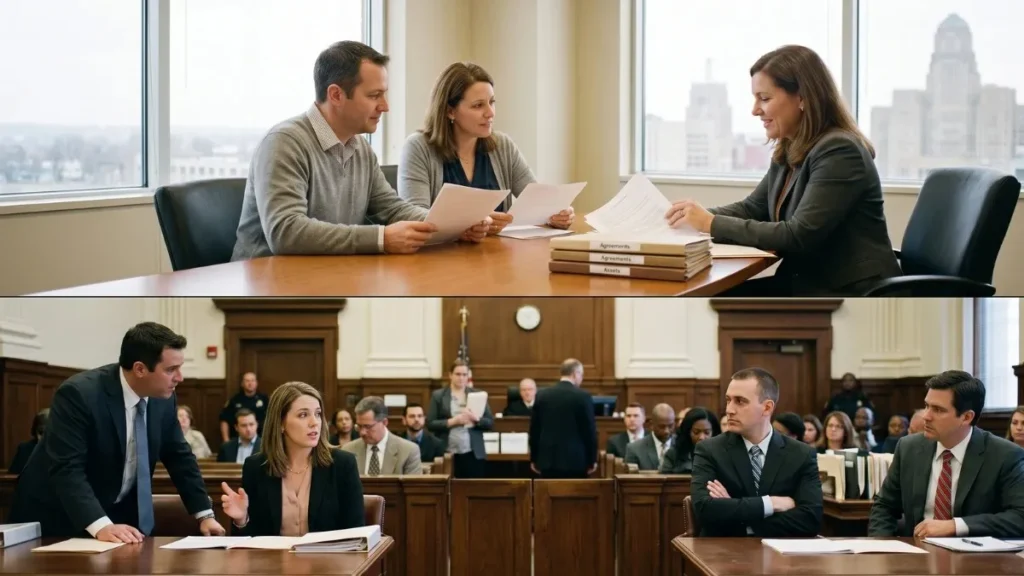
Divorces are contested or uncontested depending on the level of agreement between the spouses.
What is an Uncontested Divorce?
An uncontested divorce is one in which both parties agree on the key issues involved in the divorce.
This involves discussing:
- Property division
- Child custody
- Child support
- Spousal support
- Debt responsibilities
- Visitation schedules
Uncontested divorces are usually streamlined and quicker because there are no major issues that would need to be addressed by the court.
Benefits of an Uncontested Divorce
Many couples opt for uncontested divorces, and the good news is that they have many benefits.
Lower Costs
Less contact with the court and less legal representation means lower legal costs.
Faster Resolution
Both sides usually agree with each other on key points, so the case can progress through the court system more rapidly.
Less Emotional Stress
Mediation among spouses can help decrease conflict and strain.
Greater Privacy
There are fewer court proceedings and, therefore, less public discussion of personal matters.
More Control
Spouses have more influence in decisions than giving it up to a judge.
The Challenges of an Uncontested Divorce
Uncontested divorces are usually quicker and simpler, but they aren’t the best option in every case.
Potential challenges include:
- Power imbalances between spouses
- Incomplete financial disclosures
- Lack of legal guidance
- Future disputes arising from unclear agreements
It’s often a good idea to have a lawyer examine settlement agreements, even in non-hostile cases.
What Is a Contested Divorce?
A contested divorce happens if couples are unable to reach an agreement on one of the significant issues.
There are five areas of potential conflict:
- Child custody
- Property division
- Alimony
- Child support
- Business ownership
- Retirement accounts
Disagreements may occur, and in such cases, it’s frequently a court’s job to settle them.
Benefits of a Contested Divorce
A contested divorce is a more complicated type of divorce, but it can be required under certain circumstances.
protection of legal rights.
Court supervision ensures fair treatment for both parties.
Resolution of Complex Issues
In cases where assets are significant and custody issues are complex, judges can help settle disputes.
Formal Discovery Process
Both parties have the right to get financial details and paperwork by legal means.
Structured Legal Process
There are formal rules that govern the way that disagreements are resolved in the court system.
Challenges of a Contested Divorce
There are various challenges with contested divorces.
Higher Costs
The higher costs that come with attorney fees, court appearances, and expert witnesses add cost.
Longer Timelines
Often, it can take months or years to settle contested cases.
Increased Stress
When the marriage is on the brink of separation, it can be difficult for both spouses and children to manage their emotions.
Less Predictability
Unresolved issues are ultimately judged by the judges, which lessens personal control over the outcome.
Key Differences Between Contested and Uncontested Divorce
| Factor | Uncontested Divorce | Contested Divorce |
| Agreement Between Spouses | Full agreement | One or more disputes |
| Cost | Lower | Higher |
| Timeline | Faster | Longer |
| Court Involvement | Minimal | Significant |
| Stress Level | Generally lower | Often higher |
| Legal Complexity | Simpler | More complex |
| Attorney Involvement | Limited to moderate | Extensive |
Recognizing such differences aids in assessing a situation better.
The Divorce Buffalo, NY Process
There are a number of steps involved in getting a divorce, whether or not it is contested or uncontested.
Step 1: Filing For Divorce.Step
A divorce process is started by one spouse in the relevant New York court.
Documents that may be required:
- Summons
- Complaint
- Financial disclosures
- Settlement agreements (if applicable)
Step 2: Serving Divorce Papers
The filing spouse is required to provide the other spouse with the divorce paperwork.
There is notice of the proceeding to both parties if the service is made properly.
Step 3: Other Spouse’s Response
The other spouse may:
- Agree to the divorce
- Contest-specific issues
- File a response
This is one of the best stages in knowing whether the divorce will be contested or not.
Step 4 – Negotiations and Settlement discussions
Many couples try to solve conflicts by means of:
- Attorney negotiations
- Mediation
- Collaborative divorce processes
Settlement discussions can help prevent the need for a lengthy court process.
Step 5: Discovery Process (Contested Cases)
When a divorce is contested, both sides share information about:
- Income
- Assets
- Debts
- Property ownership
- Financial accounts
This process can assist in informed decision-making.
Step 6: Court Hearings
If the disputes have not been resolved, then a court hearing may be set.
The judge hears the evidence and arguments of both sides.
Step 7: Final Judgment of Divorce
Final judgment will be issued to the court once the issues have been resolved.
At this point, the marriage is officially ended.
Child Custody Considerations
One of the most delicate issues in a divorce is child custody.
Courts prioritize:
- Child safety
- Emotional well-being
- Stability
- Best interests of the child
In an uncontested divorce, parents can choose on their own what their custody arrangement should be, and in a contested divorce, they can ask the court to make the decision.
Read more–:–Top Divorce Lawyers in Buffalo
Property Division in New York
New York is a state with equitable distribution laws.
This applies when there is a division of marital property, which is done fairly, but not necessarily equally.
Some factors that can be taken into consideration include:
- Length of marriage
- Income levels
- Contributions to the marriage
- Future financial needs
Contested divorces are often caused by issues regarding property distribution.
Role of Mediation in Divorce
Couples can settle their conflicts without going to court by using mediation.
Benefits include:
- Lower costs
- Faster resolution
- Improved communication
- Greater control over outcomes
For many Buffalo couples, mediation is an option that prevents the court from going through a long process of litigation.
How Long Does Divorce Take in Buffalo, NY?
The duration of timelines will depend on the complexity.
Uncontested Divorce
May take a few months to complete if the blog is done properly.
Contested Divorce
May take several months or years, depending upon disagreements and court procedures.
Some things that influence timelines are:
- Custody issues
- Asset complexity
- Court availability
- Cooperation levels
Common Reasons Divorces Become Contested
Many reasons often cause disagreements.
Examples include:
- Child custody disagreements
- Hidden assets
- Business ownership conflicts
- Spousal support disputes
- Real estate division
- Retirement account allocation
Knowing about these issues can equip couples to anticipate future problems.
When to Hire a Divorce Attorney
While some cases can be resolved without a fight, a lawyer can help in uncontested divorces as well.
The attorney can assist:
- Review agreements
- Protect legal rights
- Handle court filings
- Resolve disputes
- Explain legal obligations
In a complex case with substantial assets, professional advice is particularly crucial.
Mistakes to Avoid During Divorce
Common mistakes include:
- Hiding financial information
- Making emotional decisions
- Ignoring legal deadlines
- Failing to document assets
- Neglecting parenting considerations
These mistakes can be avoided and can lead to better results and lower complication rates.
Financial Preparation for Divorce
The process can be made easier if you are well prepared.
Helpful steps include:
- Gathering financial records
- Reviewing debts
- Creating a budget
- Understanding assets
- Monitoring expenses
Financial organisation contributes to information for negotiations.
Emotional Considerations During Divorce
Divorce has more implications than just financial and legal.
Many individuals experience:
- Stress
- Anxiety
- Uncertainty
- Emotional exhaustion
Support from family, friends, counselors, or support groups may be beneficial during the process.
Final Thoughts
A key component to deciding between contested and uncontested divorce is understanding the divorce Buffalo, NY process. An uncontested divorce will be faster, cheaper, and less stressful, but a contested divorce might be needed when there are major child custody, financial, or property differences.
Every circumstance is different and the best plan will vary based on the nature of the marriage and separation. Knowing the distinctions, careful planning and planning, and consultancy to professionals if necessary, individuals can better prepare themselves to handle the divorce procedure with confidence and to achieve fair and sustainable results for themselves and their families.
Whichever route your case takes, it follows the full filing process from summons to judgment.
FAQs
1. What is the difference between a contested and an uncontested divorce?
An uncontested divorce occurs when both spouses agree on all major issues. A contested divorce happens when disagreements exist regarding custody, support, property division, or other important matters.
2. How long does an uncontested divorce take in Buffalo, NY?
An uncontested divorce can often be finalized within a few months, depending on court processing times, paperwork accuracy, and whether all required documents are properly submitted.
3. How long does a contested divorce take?
A contested divorce may take several months or even years, depending on the complexity of disputes, court schedules, financial issues, and custody-related disagreements.
4. Is an uncontested divorce less expensive?
Yes. Uncontested divorces are generally more affordable because they require fewer court appearances, less attorney involvement, and fewer legal procedures than contested divorces.
5. Do I need a lawyer for an uncontested divorce?
While not always required, hiring a lawyer can help ensure paperwork is completed correctly, agreements are fair, and your legal rights are protected throughout the process.
6. What issues commonly cause a divorce to become contested?
Common disputes involve child custody, child support, spousal support, division of assets, business ownership, retirement accounts, real estate, and debt allocation between spouses.
7. Can a contested divorce become uncontested later?
Yes. Many contested divorces become uncontested when spouses reach agreements through negotiation, mediation, or settlement discussions before a final court decision is made.
8. What is mediation in a divorce case?
Mediation is a process where a neutral third party helps spouses negotiate and resolve disputes outside of court, often reducing costs, delays, and emotional stress.
9. How is property divided in a New York divorce?
New York follows equitable distribution laws, meaning marital property is divided fairly based on various factors, though the division is not always exactly equal.
10. What should I do before filing for divorce?
Before filing, gather financial records, review assets and debts, create a budget, understand your goals, and consider consulting an experienced divorce attorney for legal guidance.